
Beyond Blueprints: Why Integrated Engineering Is Critical for Malta’s Industrial Future
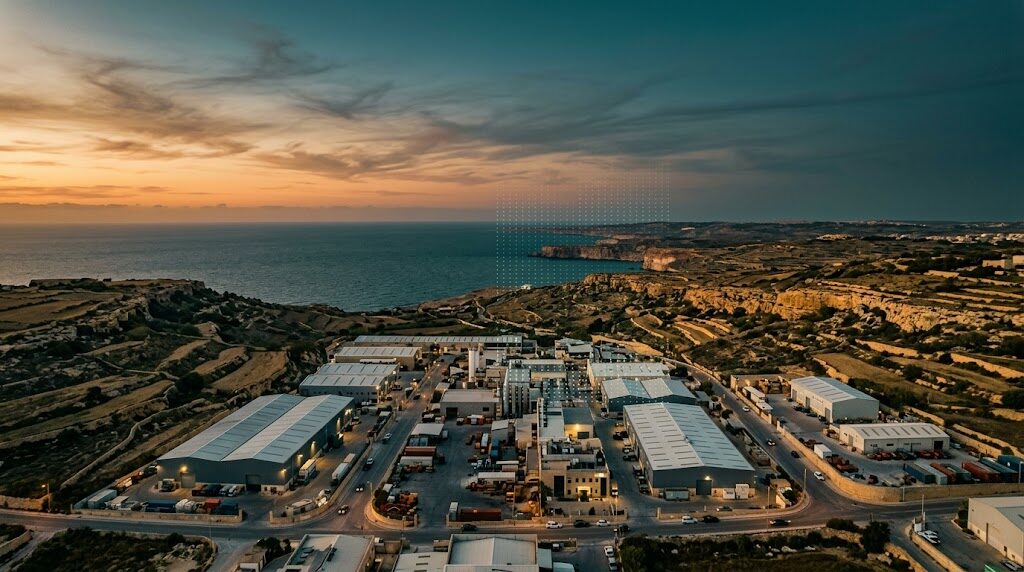
Malta’s manufacturing sector is set to more than triple in value by 2035, growing from €700 million to a projected €3.3 billion under the recently launched Vision 2050 framework. Advanced manufacturing, life sciences, and healthcare are at the centre of this transformation, and with that ambition comes a fundamental question: is Malta’s industrial infrastructure ready?
For too many facility owners, the answer is no. Not because of a lack of investment, but because of a fragmented delivery model that turns every new build and retrofit into a coordination nightmare.
The Fragmentation Problem: Malta’s Costliest Engineering Bottleneck

The typical industrial project in Malta still follows a siloed model. An architect designs the building envelope. A separate MEP contractor handles mechanical and electrical services. A third party installs process equipment. And only at the very end does a validation consultant arrive to assess whether the facility meets EU GMP requirements or FDA expectations.
The result is predictable: design clashes discovered during construction, compliance gaps identified during qualification, budget overruns averaging 15 to 25% on complex projects, and a blame cycle between disconnected contractors. Every handoff between parties introduces risk, including lost knowledge, misaligned assumptions, and costly rework.
For sectors like pharmaceuticals, food and beverage, and healthcare, where regulatory compliance is non-negotiable, this model is not just inefficient. It is commercially dangerous.
What Is Integrated Engineering, and Why Does Malta Need It Now?

Integrated engineering is the practice of managing design, construction, and validation as a single, continuous lifecycle rather than as disconnected phases. It means the engineers who design a cleanroom HVAC system are the same team who will commission and qualify it, eliminating the knowledge gaps that cause problems downstream.
This isn’t a theoretical concept. In the complex pharmaceutical and biotech markets of mainland Europe, integrated delivery has been standard practice for over a decade. Malta, with its growing ambitions in life sciences and advanced manufacturing, can no longer afford to lag behind.
Vision 2050’s Sustainable Economic Growth pillar explicitly targets high-value manufacturing, Industry 4.0 adoption, and increased R&D investment. Delivering on these goals demands facilities that are designed for compliance from day one, not retrofitted for it after the fact.
The Turnkey Model: How One-Partner Delivery Eliminates Risk
At TC Engineering, we deliver integrated engineering through a turnkey model that covers the full project lifecycle. Rather than coordinating between five or six independent contractors, our clients work with a single multidisciplinary team that is accountable from concept through handover.
Here is what that looks like in practice:
Consultancy & Engineering: Designing for Compliance, Not Just Construction
Our engineering designs are developed with the end-state in mind. Every P&ID, layout drawing, and specification is shaped by the regulatory framework the facility must satisfy, whether that is EU GMP Annex 1, FDA 21 CFR Part 211, or HACCP standards for food production. This front-loaded approach means fewer change orders and a smoother path to qualification.
Construction & General Contracting: Building What the Digital Twin Promised
Using BIM (Building Information Modelling) and a Common Data Environment, we maintain a single source of truth throughout construction. Clash detection happens in the model, not on the scaffold. Every decision is traceable and every change is documented, creating an audit trail that supports both operational excellence and regulatory submissions.
Commissioning & Qualification: Validation Built In, Not Bolted On
In regulated sectors, “finished” is not the same as “qualified.” Our C&Q protocols are embedded from Day 1 of the project, not introduced as a final-stage audit. Installation Qualification (IQ), Operational Qualification (OQ), and Performance Qualification (PQ) milestones are mapped to the project schedule from the outset, so there are no surprises when inspectors arrive. Find out more here. [Internal link: /services/commissioning-qualification/]
Technology as a Risk Mitigator: From Guesswork to Simulation
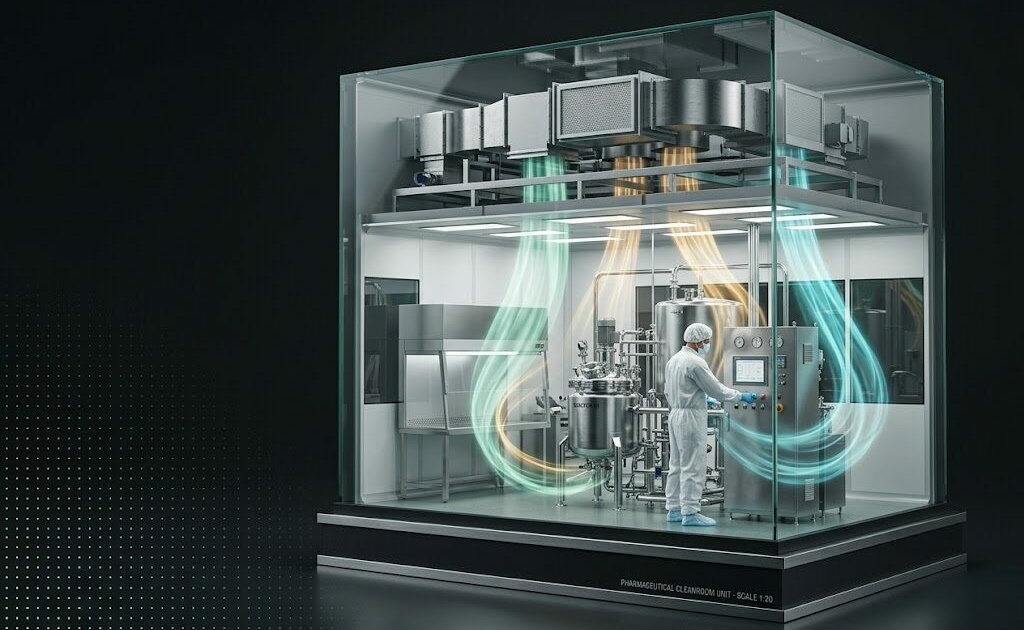
Integrated engineering is powered by data, not assumptions. Before a single brick is laid, our in-house tools allow us to predict, optimise, and validate performance digitally.
Computational Fluid Dynamics (CFD) enables us to simulate airflow patterns, temperature gradients, and particle dispersion in cleanrooms and controlled environments. This identifies problems, such as dead zones in laminar flow or inadequate air change rates, months before physical construction begins.
Process Simulation allows us to model production workflows, evaluate capacity bottlenecks, and test “what-if” scenarios before committing capital. For a pharmaceutical client, this might mean simulating batch cycle times across different equipment configurations to identify the optimal layout.
This transforms engineering from a reactive discipline, one that fixes mistakes on-site, into a proactive one that optimises performance before construction even starts.
Local Delivery, International Standards
TC Engineering operates through a strategic alliance between the Italy-based Techniconsult Group, with over 35 years of experience in regulated facility design across mainland Europe, and Malta’s Bajada Lyons Group, one of the island’s most established investment groups.
What does this mean for clients in practice? It means access to engineering methodologies refined in one of Europe’s most demanding regulatory environments, delivered by a team that understands Malta’s local supply chains, permitting processes, and operational realities. It is global technical depth with local execution capability.
TC Engineering is also formally committed to engineering that serves environmental and community outcomes alongside commercial performance, aligning directly with Vision 2050’s emphasis on sustainability, decarbonisation, and responsible growth.
Frequently Asked Questions
What is integrated engineering?
Integrated engineering is an approach where design, construction, and validation are managed as a single continuous process by one multidisciplinary team, rather than being split across separate contractors. This eliminates knowledge gaps, reduces rework, and ensures regulatory compliance is designed in from the start.
Why is turnkey delivery important for regulated facilities?
In sectors like pharmaceuticals and food production, facilities must satisfy strict regulatory standards (EU GMP, FDA, HACCP). When design, build, and qualification are handled by different parties, compliance issues are often discovered too late. Turnkey delivery ensures validation requirements shape every decision from day one.
How does TC Engineering use simulation technology?
We use Computational Fluid Dynamics (CFD) to model airflow and thermal performance, and Process Simulation to optimise production workflows. These tools identify design issues and performance bottlenecks digitally, before physical construction begins, reducing cost and schedule risk.
■ Ready to move beyond fragmented delivery?
Contact our team to discuss your next project.

