
Solving Design Clashes Before They Reach Site: How Integrated Engineering Protects Your Build in Malta
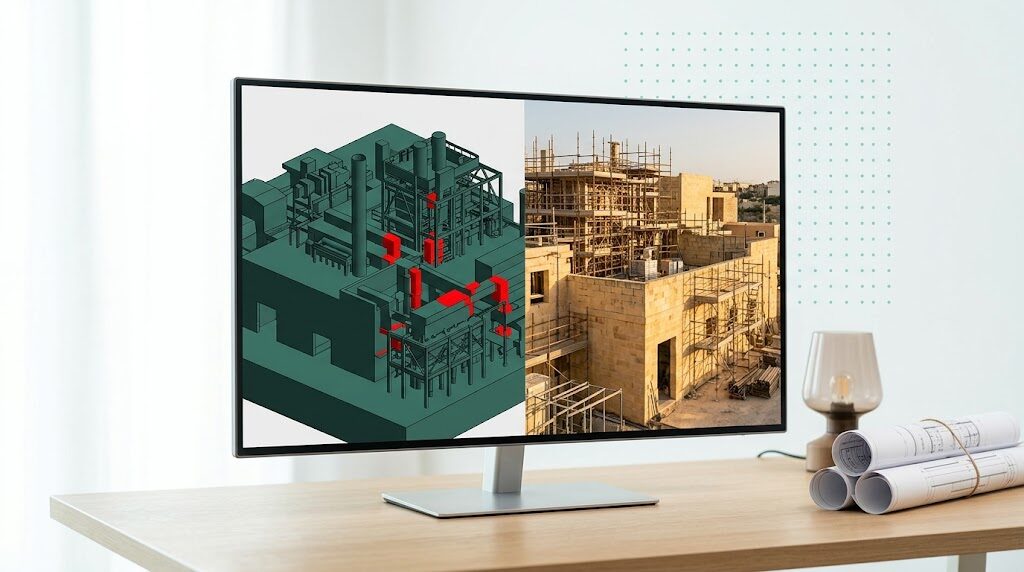
Most design clashes are not technical failures. They are coordination failures.
A structural engineer produces excellent work. So does the MEP consultant. So does the process equipment supplier. But because they are working from separate models, on separate timelines, with separate assumptions, the outputs conflict. A beam obstructs a duct route. A cable tray encroaches on a maintenance access zone. A cleanroom pressure cascade fails because the HVAC layout was finalised without input from the process team.
On any project, these clashes will surface eventually. The question is where. If they surface in a coordinated digital model during design, the cost of resolving them is measured in hours. If they surface on a scaffold in Malta, where constrained sites leave no room for workarounds, material lead times stretch across the Mediterranean, and a single delayed trade can lock out three others, the cost is measured in weeks and tens of thousands of euros.
Coordination risk is either managed or inherited. If no one in the project structure owns it explicitly, the client inherits it by default.
The Problem with Fixing Things at the Right Stage but in the Wrong Place
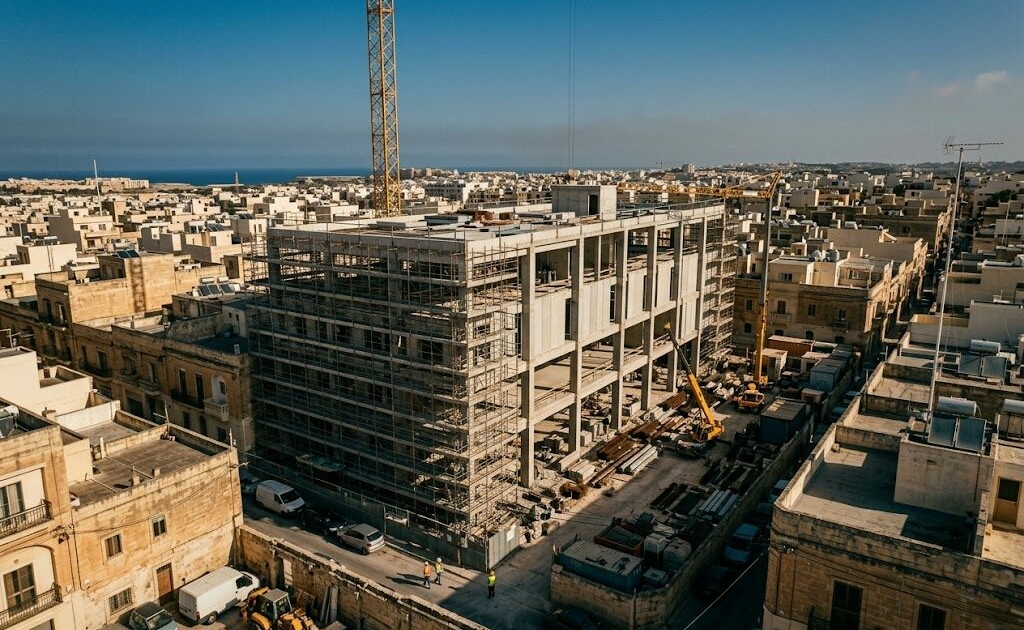
In Malta, the consequences of poor coordination are amplified by the physical and logistical realities of working on the island. Sites are tight, often with minimal laydown area. Supply chains are concentrated, with fewer fallback options when materials need reordering. Specialist labour is limited, meaning rework does not just cost money; it costs programme time that cannot be recovered by simply adding headcount.
This is why the traditional model of discovering clashes on-site is particularly expensive here. In larger European markets, a contractor might absorb a coordination failure through parallel work streams or rapid re-procurement. In Malta, the same failure creates a bottleneck that cascades through the entire project sequence.
The engineering response to this is not better site management. It is better engineering.
Starting with Decisions, Not Drawings
The earliest design decisions on an industrial facility are the most consequential and the hardest to reverse. Equipment layout, workflow sequencing, HVAC zoning, utility routing: these choices lock in during concept and basic design. Every subsequent phase inherits them.
This is why our engineering process at TC Engineering begins with simulation, not drawings. We do not produce a layout and then check whether it works. We model how the facility will operate and let the results shape the design.
For a pharmaceutical production facility, this means using process simulation to model batch cycle times, material flows, and capacity constraints across alternative equipment configurations before a single P&ID is issued. The layout that goes to detailed design is the one that has already been tested against real operating scenarios.
For environments where airflow, thermal behaviour, and particle control are critical, we use Computational Fluid Dynamics (CFD) to validate the design against regulatory performance standards, not in a general sense, but specifically: does this cleanroom achieve the pressure cascade required under EU GMP Annex 1? Do the air change rates meet ISO 14644 at the point of use? Are there dead zones in the laminar flow that would compromise product quality? These questions are answered in the model, not during commissioning.
A compliant facility is designed that way from the start, not validated at the end. If the first time anyone tests whether the HVAC system meets Annex 1 is during operational qualification, the project is already carrying risk that could have been resolved months earlier at a fraction of the cost.
One Model, One Team, One Set of Assumptions
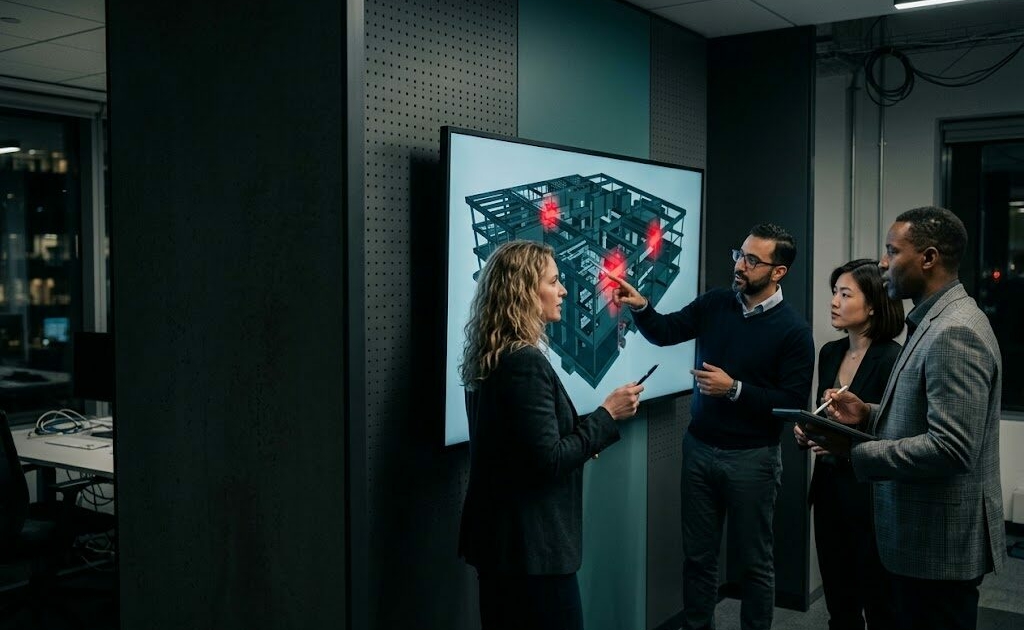
Even when the early-stage engineering is sound, clashes emerge when disciplines are coordinated across organisational boundaries. A structural model developed by one firm, an MEP layout by another, and a process design by a third create three separate versions of the same facility. Reconciling them is where coordination breaks down.
At TC Engineering, civil, structural, mechanical, electrical, process, and automation design sit within one project structure, working from one federated BIM model supported by a Common Data Environment (CDE). Clash detection is not a milestone event that happens once before construction. It runs continuously as the design develops. Every week, the model is reviewed across disciplines. When a duct route conflicts with a structural element, or a cable tray violates a clearance zone, the clash is flagged and resolved in the model by the engineers who created it, not escalated to a third-party coordinator who lacks the context to make a design decision.
This distinction matters. Coordination is not just about having the right software. It is about having the right organisational structure. If the structural engineer and the MEP engineer report into different companies with different commercial interests, resolving a clash becomes a negotiation. If they report into the same project structure with shared accountability for the outcome, it becomes an engineering decision, resolved in hours rather than weeks.
For existing facilities in Malta, where accurate as-built information is often unavailable, we use 3D laser scanning to create a precise digital record of the current building before any new design work begins. In a market where many industrial buildings have been extended and modified over decades without updated documentation, this step alone prevents a category of clashes that would otherwise be invisible until site work starts.
Validating Before You Build

Before a design is approved for construction, our team uses Virtual Reality to walk the client, the facility manager, and the operational staff through the facility digitally. This is not a presentation tool. It is a decision-making tool. We use it to test whether maintenance access is practical, whether operator sightlines work, whether equipment clearances are realistic for the people who will actually use the space. Changes made at this stage cost nothing. The same changes discovered after installation can cost tens of thousands.
During construction, Augmented Reality overlays the coordinated 3D model onto the physical site. In Malta, where access constraints often mean engineers cannot be on-site continuously, this allows faster inspections and immediate visual confirmation that the build matches the design intent, reducing the reliance on markup drawings and verbal descriptions that introduce interpretation risk.
Why Tools Without Integration Solve Nothing
Many firms list BIM, CFD, and simulation in their capabilities. The question that matters is not whether a firm owns the tools, but whether those tools are embedded in the decisions that shape the project.
A CFD model that validates an HVAC design but is run by a separate consultant after the layout is fixed adds confidence; it does not reduce risk. A BIM model that detects clashes but sits outside the design team’s workflow creates reports that queue for resolution rather than getting resolved in the moment. Tools matter when they sit inside the engineering process, operated by the same people making the design decisions, at the stage where those decisions are still open.
This is how TC Engineering operates. Our simulation, BIM, and immersive validation tools are not services we offer alongside engineering. They are part of the engineering. The same team that designs the HVAC system runs the CFD. The same team that coordinates the disciplines manages the federated model. The same team that designs the facility is the team that commissions and qualifies it. There is no handoff, no gap, no lost context.
The outcome for our clients is straightforward: fewer surprises on-site, tighter control over budget and programme, and a facility that is built right the first time. In Malta, where the margin for error is smaller than in larger markets, that is not a nice-to-have. It is the difference between a project that delivers and one that drifts.
Frequently Asked Questions
[Implement as FAQ Schema for rich snippets]
What causes most design clashes on construction projects?
The majority of design clashes are coordination failures rather than technical errors. They occur when separate engineering disciplines work from independent models with different assumptions. The outputs may each be technically correct in isolation, but conflict when combined. Integrated delivery under one coordinated model prevents this.
Why are design clashes more costly in Malta?
Malta’s constrained sites, concentrated supply chains, and limited specialist labour mean that rework cannot easily be absorbed through parallel work streams or rapid re-procurement. A clash discovered on-site creates a bottleneck that cascades through the entire project sequence, with costs and delays amplified compared to larger European markets.
How does TC Engineering use CFD in facility design?
We use Computational Fluid Dynamics to validate HVAC and cleanroom designs against specific regulatory standards, including EU GMP Annex 1 and ISO 14644. CFD is run by the same engineers making design decisions, during the design phase when changes can still be made at minimal cost. This prevents performance issues from being discovered during commissioning.
What is the benefit of BIM clash detection?
BIM clash detection automates the identification of spatial conflicts between building systems within a coordinated 3D model. At TC Engineering, clash detection runs continuously as the design develops through weekly federated model reviews, not as a one-off check at the end. This catches conflicts when they can be resolved in hours rather than weeks.
■ Ready to eliminate design risk before it reaches your site?
Download our guide to digital clash prevention for industrial facilities, or book a consultation with our engineering team.
